Some collaborations are little more than a second logo on an existing jacket. In others, someone actually goes into the archive. The new capsule collection eYe JUNYA WATANABE MAN + MAMMUT belongs to the second kind. Japanese designer Junya Watanabe was given access to decades of product development from the Swiss mountain brand. He turned it into six jackets and one backpack, available worldwide since 24 September 2026.
If you know Mammut for ropes, harnesses and alpine hardshells, this may take a moment to sink in. Yet the pairing makes more sense than it first seems. Watanabe has spent years building a reputation on technical clothing and workwear that he takes apart and rebuilds. Mammut has been around since 1862, so there’s plenty of building material to work with.
Who is Junya Watanabe, and why does he fit Mammut?
Junya Watanabe has worked within Comme des Garçons for his entire career and is widely seen as one of the most influential designers working today. His menswear line eYe JUNYA WATANABE MAN focuses on functional clothing. He starts from existing silhouettes and gives them new meaning through patchwork, reconstruction and unexpected fabric combinations.
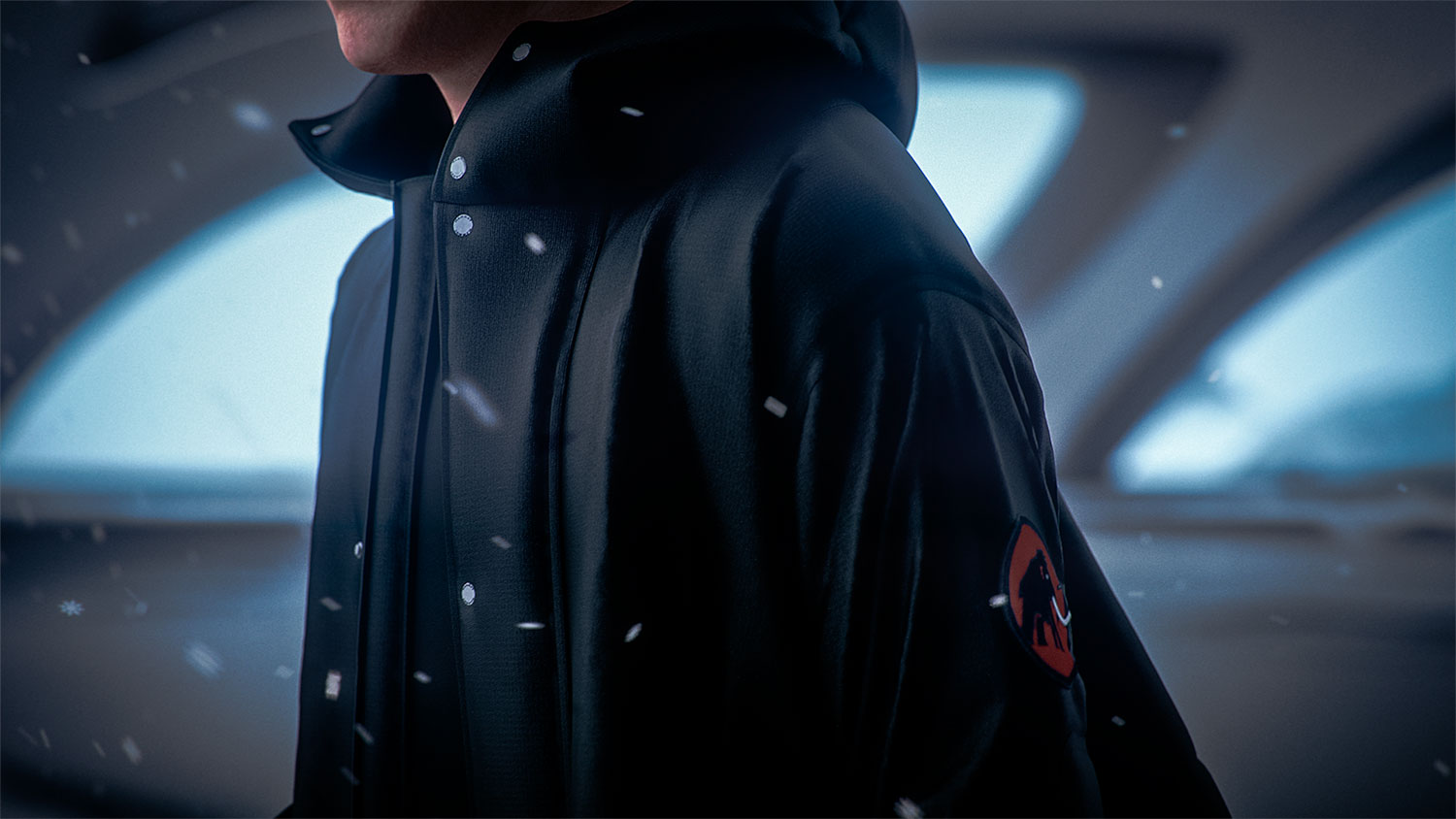
That’s why this works better than yet another logo drop. A designer who treats functional clothing as raw material needs a brand with a long and technically serious history. Mammut has that history, and Watanabe has now been given access to it on this scale for the first time.
From archive piece to city jacket
The project started in Mammut’s archive. Watanabe chose a number of classic product codes and reworked them. The point was to build new pieces, not to borrow a colour or a detail. Chief Product Officer Paul Cosgrove says Mammut specifically asked him to work with its product heritage.
Junya Watanabe says :
To create some pieces that combine the craftsmanship and elegance of eYe JUNYA WATANABE MAN with the genuine alpine expertise and technical innovation of Mammut.
The collection: Ventile, patchwork and eiderdown
The core of the collection is six jackets. For gear readers, three of them stand out, mostly because of their materials.
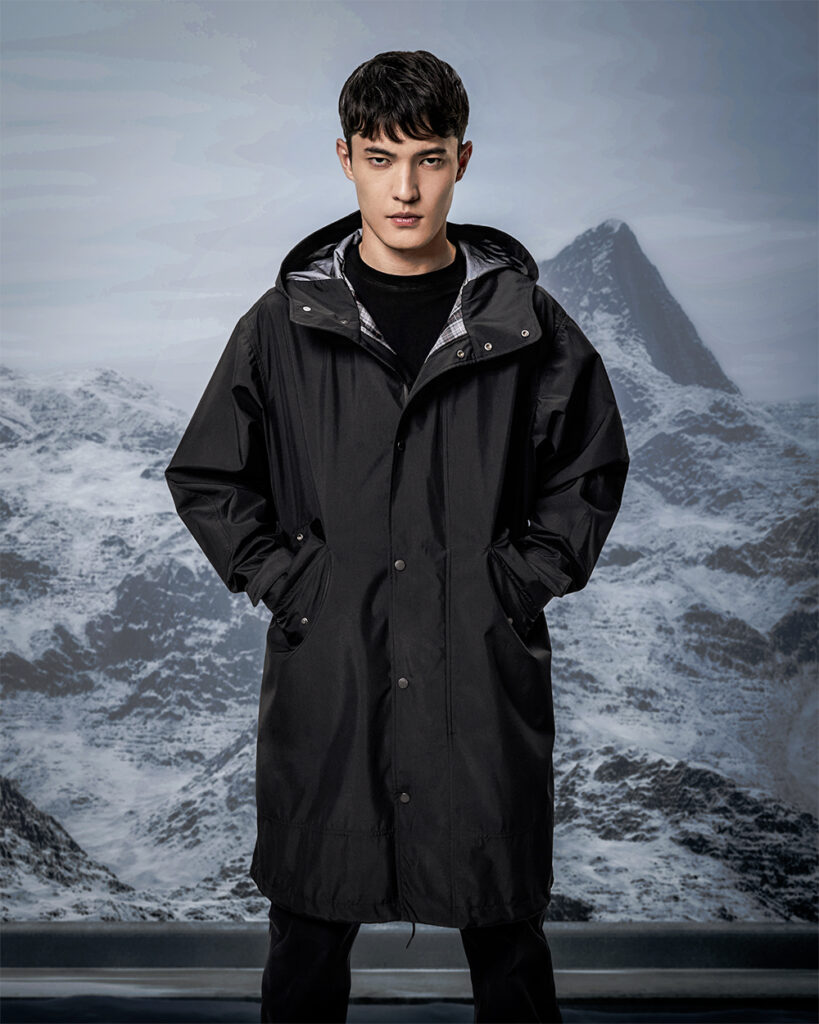
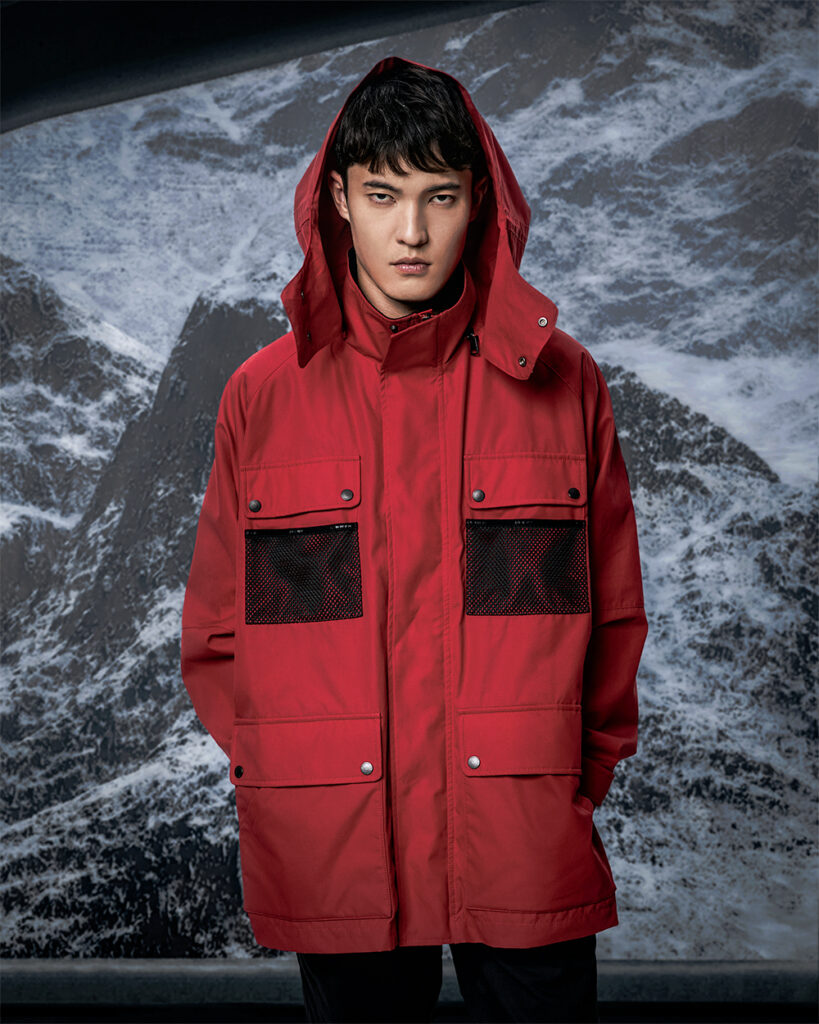
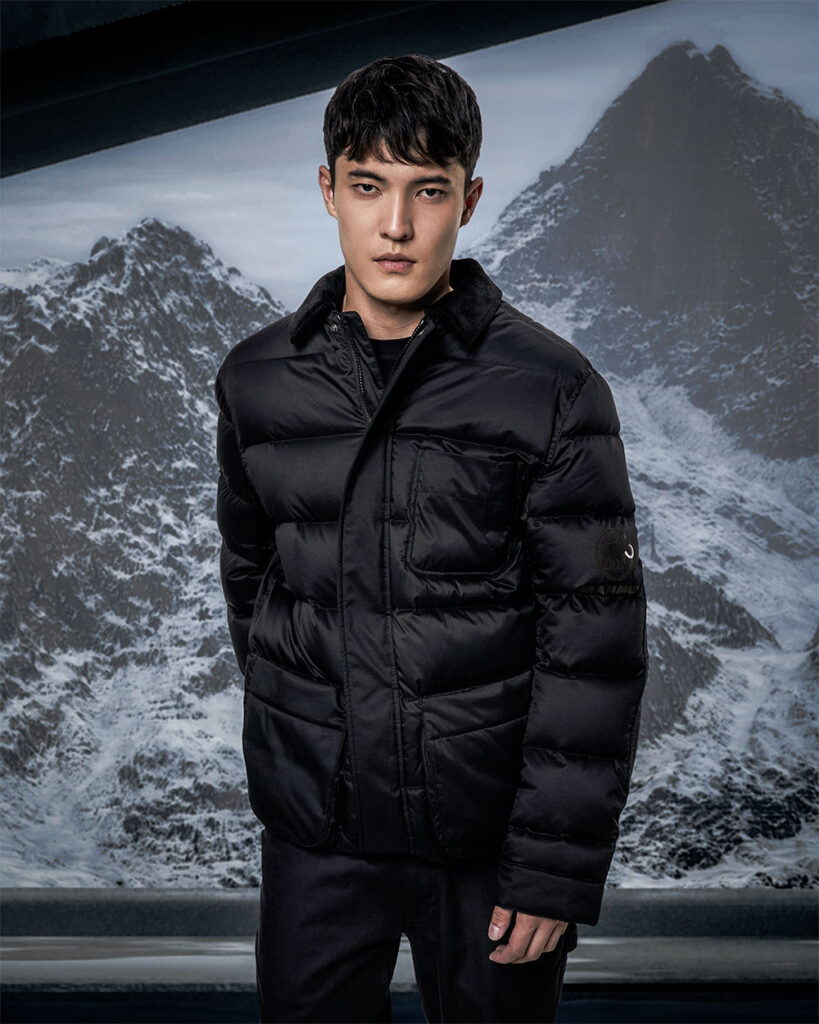
The first is a Ventile® jacket with a detachable hood. Ventile is a very densely woven cotton developed in England in the 1940s. When it gets wet, the cotton fibres swell and the weave closes up further. That keeps the fabric water-repellent without a coating, and it breathes better than most membranes. It’s also quiet, which you notice in the city more than you’d expect.
The second is an insulated jacket with Watanabe’s signature patchwork. In his work, patchwork isn’t decoration but a way of building: panels with different textures and functions are visibly joined together.
The third is an eiderdown piece. This insulation comes from the nests of the eider duck and is gathered by hand after the breeding season. Each nest yields only a few grams, which is why it’s one of the rarest and most expensive insulation materials there is.
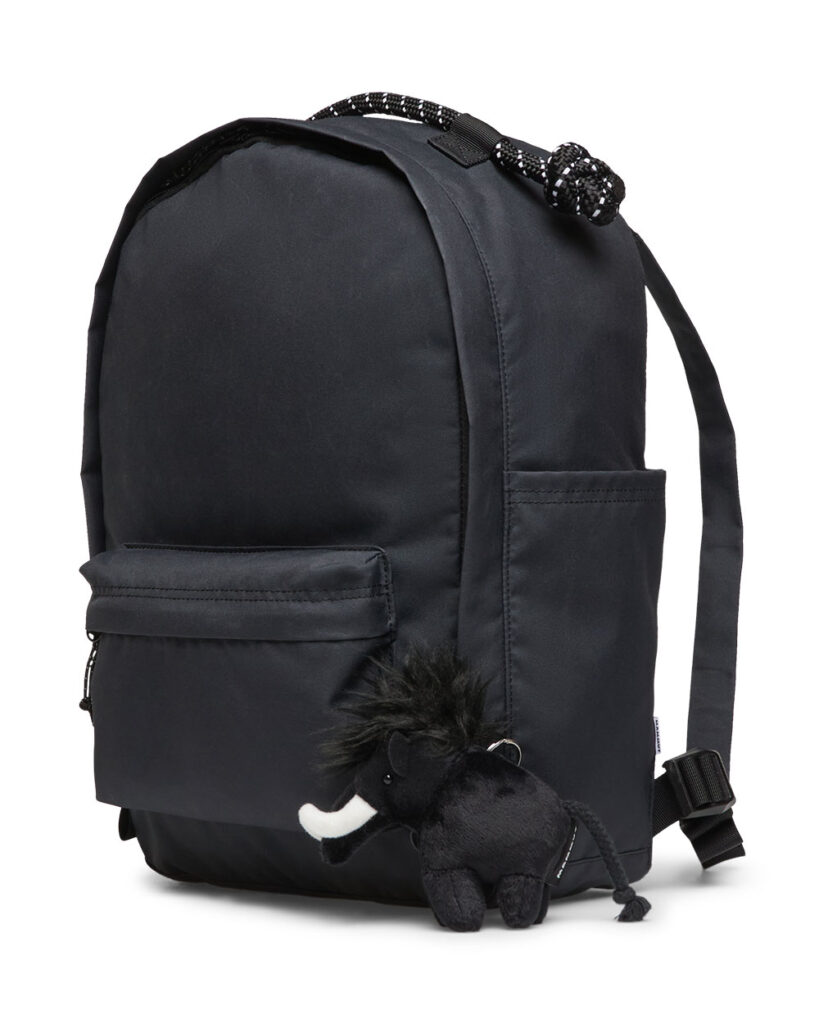
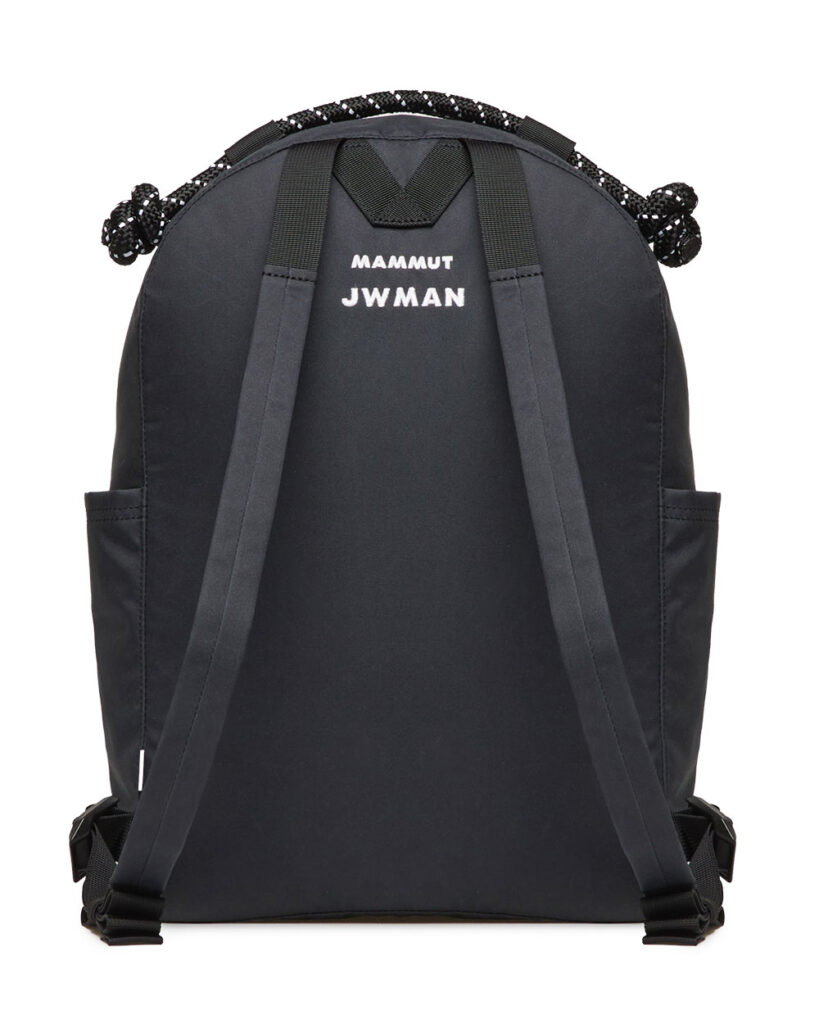
There’s also a minimalist backpack with a handle inspired by climbing rope. The Mammut mammoth mascot hangs from a carabiner. It’s a nod to the brand’s climbing roots, and probably the piece that will sell out first.
Made for the city, with mountains in its DNA
To be fair about it: this isn’t alpine equipment. Mammut says itself that the collection is designed “for modern lifestyles rather than purely technical mountain use.” You won’t be climbing the Eiger in these jackets, and you don’t need to.
There are still genuinely functional pieces in the collection, though. Nobody picks Ventile and eiderdown for their looks; both actually perform. That sets this capsule apart from the many fashion-outdoor crossovers where the technical side only exists in the campaign imagery. You’re paying for design, and for materials that have earned their reputation in the field.
Escalators above the tree line
The campaign is as unconventional as the collection. In a CGI animation, urban elements appear in the middle of alpine landscapes: escalators above the tree line, elevators opening onto a summit. The imagery sums up the collaboration: two worlds that normally never meet, connected by curiosity.
The collaboration reflects Mammut’s ongoing commitment to exploring how mountain culture can inspire creativity far beyond the alpine environment.
Heiko Schäfer, CEO, Mammut
A brand that opens its archive to a designer who’s allowed to take it apart and rebuild it has confidence in what’s in that archive. For Mammut, that may be the most important result of this collaboration: proof that its product heritage is strong enough to hold up on the runway just as well as on the mountain.
Good to know
- Where can I buy the eYe JUNYA WATANABE MAN + MAMMUT collection?
The collection has been available worldwide since 24 September 2026, through selected Mammut channels and a number of premium retailers. Capsules like this are produced in small quantities, so sizes and colours sell out quickly. [CHECK: Dutch/Benelux stockists] - What is eYe JUNYA WATANABE MAN?
eYe JUNYA WATANABE MAN is a line by Junya Watanabe within Comme des Garçons, focused on menswear built on a functional foundation. It’s known for collaborations with outdoor and workwear brands, in which existing classics are reconstructed. - Is a Ventile jacket actually waterproof?
Ventile is highly water-repellent and keeps you dry in normal rain, but it isn’t fully waterproof like a jacket with a membrane and taped seams. Its advantages are breathability, durability and a quiet fabric. - What makes eiderdown so special?
Eiderdown has an exceptionally high warmth-to-weight ratio, because the down clusters interlock and trap a lot of air. It’s collected by hand from abandoned nests, which keeps supply very limited. - Is this collection suitable for mountain sports?
No, it wasn’t designed for that. The pieces are meant for everyday use in the city. For technical mountain use, Mammut’s regular line remains the obvious choice.